
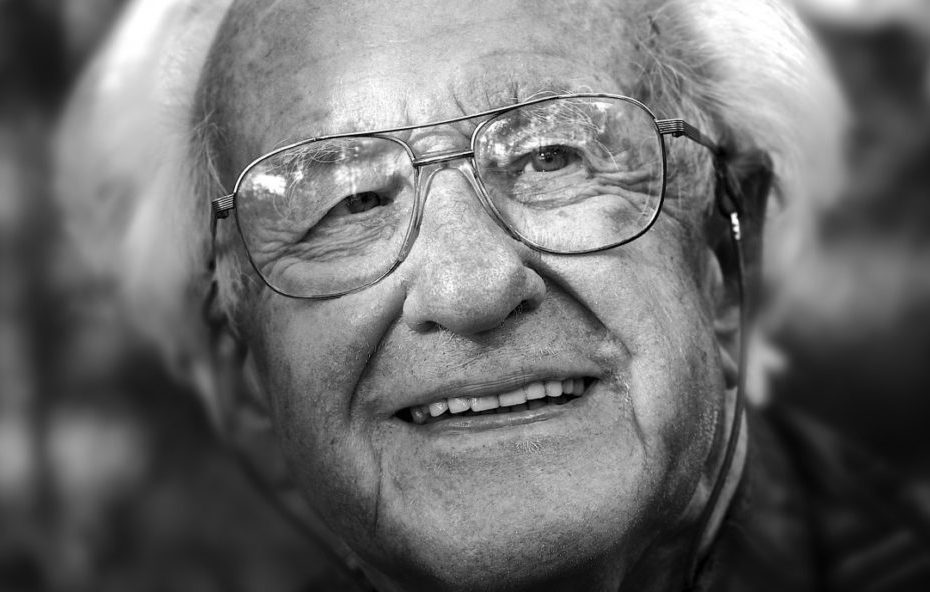
Here follows first what I have written about Johan in my non-moires entitled “WorldMoires,” chapter 2 – Inspirers and Mentors.
Secondly follows my introduction to Susanne Urban’s fine book in Norwegian, “Galtungs Metode For Fred. Fredsforsker Johan Galtungs liv, teorier og innflytelse,” Kolofon Forlag 2020.
Finally, since Johan was invited by my first peace mentor, Aage Bertelsen to give a guest lecture at Aarhus Cathedral School, my high school, in 1968, I include a link to an article we wrote to commemorate Bertelsen.
In different ways, these three posts explain to the visitors to this memorial site what Johan has meant to me and how our cooperation and friendship developed.
•
Aage Bertelsen had the idea to occasionally gather all the school’s students and teachers to attend a lecture by an invited expert who would enlighten us concerning an essential subject of our times. In 1968, he invited Norwegian peace researcher Johan Galtung (1930-2024) to speak to us. Bertelsen was very well informed about war and peace studies because he had used them in his own books and speeches. And since Galtung had established the first institute in Scandinavia, the Peace Research Institute Oslo, PRIO, he thought we should learn about this new academic field.
That was my first encounter with Johan. I immediately understood that here was an intellectual with extraordinary insights, a brilliant speaker who understood how to speak to young people, the furthest you could come a dry academic.
Of course, Johan did not pay attention to me in the crowd, but I did to him. We later met in Dubrovnik, Yugoslavia, in 1974, where he was the director of the Inter-University Center, IUC – an innovative international network university.
We have been friends and colleagues ever since – now 54 years – and he became one of my two mentors in peace research, the other one being a friend of his, Håkan Wiberg, to whom I turn in a minute.
In the first decades, I could always send my manuscripts to Johan, who would quickly read, comment and suggest improvements – mainly in the direction of: Turn that argument upside-down, look at it from another – or larger – perspective. Read that brilliant author too. Or, what would you suggest then, to solve the problem?
One of his more simple models is a classical triangle with three corners: Data (D)-Theory (T)-Values (V): Combine D and T, and you do empirical work. Combine D and V, and you do critical work and then combine T & V, and you do constructive work. Social science includes all three. We must not just describe and criticise what we find and then leave it to politicians to make decisions about solutions. It’s the duty of the scientist to come up with constructive, innovative, visionary thinking and dialogue with lots of different audiences – certainly not only trying to catch the attention of politicians.
As a son of a doctor, Johan always emphasised another three-step process for peace research: Diagnosis (D), Prognosis (P) and Treatment (T): What is the conflict about – not who is right and wrong (D)? What may happen if we, or the parties, do X or Y or Z with a conflict and if we do nothing (P)? And how do we develop creative methods of treatment, roads to peace by peaceful means (T)? This way of thinking shows how close the science of medicine, or rather health, is to that of conflict and peace – and how they are creative pathways into a better future.
I like the simplicity and beauty of such models – not saying they are simple to do. But, although they are pretty easy to grasp, they are still not understood by the vast majority of decision-makers. Probably because, in the field of international politics, decision-makers do not seek genuine conflict-resolution or peace but – as in most of the conflicts I have been engaged in – seem to do peace-prevention to further the needs of what may generally be called the Military-Industrial-Media-Academic Complex, MIMAC, which is an exceedingly ‘hard’ structure driven by military/weapons-addicted elites outside of democratic control and functioning as a Perpetuum mobile. I mean, if NATO’s philosophy and policy had anything to do with peace, it would have created peace long ago. But, unfortunately, it’s just can’t.
Since Dubrovnik in 1974, we’ve worked together on many re-conceptualisations of, e.g. militarism theory, human security, alternative defence, ways of thinking or social cosmology/deep structures and above all, our common fate in one sense: Dear old Yugoslavia.

© Jan Oberg
In 2014, Galtung, Wiberg and I published a huge blog, equivalent to about 2000 A4 pages,” Yugoslavia: What Should Have Been Done?” It consisted of manuscripts, articles, book chapters, press conference intros that we wrote during the 1990s with not a word changed. It’s up to anyone today to see where we went wrong and where we turned out to be right – in terms of Diagnosis, Prognosis and Treatment. The three authors had about 130 man-years of experience from Yugoslavia, and my own contributions to that online book alone were based on 3000 interviews with people in all republics, not just in the capitals but in all the local conflict hotspots, with people of all walks of life and with people from the international so-called community. If you understand Yugoslavia – one of the most complex conflicts anywhere in the world – you’re well equipped to understand rather many other conflicts. At the time of the dissolution wars in Yugoslavia, there were hardly 5 people in European ministries of foreign affairs who had any more profound knowledge or even a remote sense of the fact that everything related to everything else in that region.
From 1974 and onwards, I had been a student at IUC in that lovely city – it was at the time, at least. Then I became a teacher there until somewhere in the late 1980s, a Dutch professor and course director seemed to have been so annoyed that I got better evaluations from the students that he got me demoted. Anyhow, shortly after, the war reached Croatia and, sadly, the centre’s beautiful majestic building was hit, and I haven’t been there since then.
In the 1970s, I often took the night ferry from Copenhagen to Oslo to work with Johan at his Chair at Oslo University. That was when, with his mentoring, I produced the first-ever theory of human security (1976) documented in a more extensive analysis of which there is only one copy left.
I often had Johan as a guest lecturer while I was head of the Lund University Peace Research Institute, LUPRI, 1983-89. He was a main inspirer when we established the Transnational Foundation (where you’ll find hundreds of his articles).
We’ve been teaching on and off at the same places, at the European Peace University in Austria and the World Peace Academy at Basel’s University. And I’ve been lecturing several times at the Hardanger Academy for Peace, Development and Environment, which operates in his spirit in Jondal, Norway, where his family roots are.
And in-between, articles and dialogues, always been there for each other. Also, when one of us was attacked for being this and that or the third – and of course, for being arrogant.
Almost impossible to summarise, as you will have understood by now, what characterises him as a scholar?
On top, I would mention his never-failing commitment to nonviolence and Gandhi in particular. That is, to genuine peace research – also in an era where everything peace has been cancelled. Only militarists, intellectual dwarfs and peace-illiterate people advocate violence before all the non-violent methods have been tried and found without effect (a philosophy embedded in the UN Charter). But, unfortunately, over the years, so many other scholars have abandoned the ideals of nonviolence to obtain recognition through political correctness in general and state or corporate funding in particular.
Then come other words: Encyclopaedic knowledge ordered by his mind shaped by his PhDs in both mathematics and sociology. Lifelong learning and seeing connections between fields typically separated by academic borders. 160 books of his own, thousands of articles, chapters, speeches. Global operation and living and circulating between different continents but never suffering time lag.
Original thinking – “cars are for long trips like Norway-Iran, not for going to the baker”. A restless search for new approaches, cracks in systems, possibilities and potentials and a high demand on oneself – discipline – to come up with something original, something others in the trade have never thought of or written.
Extremely efficient time-management and multi-tasking – why only eat dinner and converse fully attentively with the people around the table if you can simultaneously write down ideas and sentences for the next article?
A very high degree of loyalty with friends – I have benefitted tremendously – but also a bit short on those who are not. And a brilliant lecturer – pedagogue at heart. His lectures in the 1970s and 1980s were peak points, shaping my later work as a peace researcher more than any other lecturer.

I’d like here to pay tribute to Johan’s wife, Fumiko Nishimura – her devotion to the same peace values, her wise reading of people, her analytical capacity – not the least concerning the Non-West – and her support of her slightly crazy husband and his constant physically and intellectually travelling nomadic circus. Not to forget her amazing cooking skills.
In my view, Johan Galtung is as much a life artist as a brilliant, prolific scholar. A Robert Rauschenberg of social science. Had lesser minds listened a bit more, the world would be safer, more secure and peaceful today.
After the fall of the US Empire – that he predicted so well in 2009 – his unique production and service to humanity will be seen in a clearer light and enjoy a renaissance.
It’s shameful that official Norway has treated him the ignorant, marginalising way it has and that, consequently, he has not been awarded the Nobel Peace Prize decades ago. Since it has never been awarded a scholar, he would have qualified better than anyone I can think of.
In summary, a truly loyal, intellectual and personal friendship over a lifetime in research, education and policy formation and most often over long distances.
Like with other inspires and mentors, I can only hope to pay back what he has given me by having been a reasonably good and attentive inspirer and mentor to some of my students over the years.
•
Jeg traf Johan Galtung for første gang i 1968. Jeg var 17 år gammel og gik på Aarhus Katedralskole i Danmark. Den gamle skoles rektor var Aage Bertelsen, én af lederne af den hemmelige redningsaktion af 7000 danske jøder over til Sverige og forfatter til bogen Oktober 43.
Bertelsen var desuden Danmarks vigtigste pacifist og skolemand, forfatter til klassikeren ”Her Er Dit Våben,” (1962) den største danske fremstilling af ikkevold og pacifisme. Han var dybt engageret i spørgsmålet: Hvordan kan studier og forskning bidrage til fred? Så hvem andre at indbyde end pionereren Galtung til at forelæse på sin skole?
Som stærkt samfundsengageret teenager forstod jeg at den dér Galtung med den turkise skjorte, ruskindsjakke, slips og lidt længere lyst bølget hår havde en elegance, dynamik og udstråling udover det sædvanlige: Kundskab, formidlingsevne og vision i ét. Han fangede!
Der skulle gå 7 år inden jeg løb ind i ham igen. Jeg studerede sociologi på Lunds Universitet og dér fandtes en anden af mine mentorer i fredsforskningen, den omvandrende encyklopædi med eksamen i filosofi, matematik og sociologi, Håkan Wiberg (1942-2010). Han og Johan kendte allerede hinanden godt; det, der senere blev til Lund University Peace Research Institute, LUPRI, var blevet startet i 1963 af Wiberg og en række forskere i Lund med Johan som hovedinspiration.
Wiberg kørte i de tidligere 1970ere et kort kursus på Sociologen om freds- og konfliktforskning. Jeg lærde at verden som ét samfund, makro i tid og rum. En dag i 1974 sagde han: ”Tag med ned til Dubrovnik og tag nogle kurser på Inter-University Centre, IUC. Centret ledes af Johan Galtung.”
Siden da har vi arbejdet sammen om nok så meget i freds- og fremtidsforskningen – f.eks. militarisme, menneskelig sikkerhed og alternativt forsvar. Galtung, Wiberg og Øberg publicere for nogle år siden godt 2000 A4 sider i en blog om det tema, der mere end noget andet binder os sammen: ”Yugoslavia: What Should Have Been Done?”
Under mine år som chef for LUPRI (1983-1989) var Johan en frekvent gæsteforelæser. Jeg har været gæsteprofessor på institutter rundt om i verden i hans fodspor. Vi har set institutter gå op og gå ned og jeg var med tidligt i Hardangerakademiet. Johan har været ”Associate” i Den Transnationale Stiftelse for Freds- og Fremtidsforskning, TFF, som jeg er medstifter og chef for siden 1986. Mængder af hans artikler findes på transnational.live
Kort sagt, en uhyre givende, trofast intellektuel og personlig relation over en menneskealder. Det er mig en glæde og ære at skrive dette lille forord til endnu en velfortjent bog, som fint dokumenterer Johans aldeles enestående indsats for freden – gennem forskning, formidling, politik – og venskab.
Lund, 16. juni 2020
•
Finally here our article from 2014 about Denmark’s most important pacifist, Aage Bertelsen, who gave me the opportunity to acquaint myself with Johan for the first time in 1968.
Aage Bertelsen (1901 – 1980) – Danish educator for peace
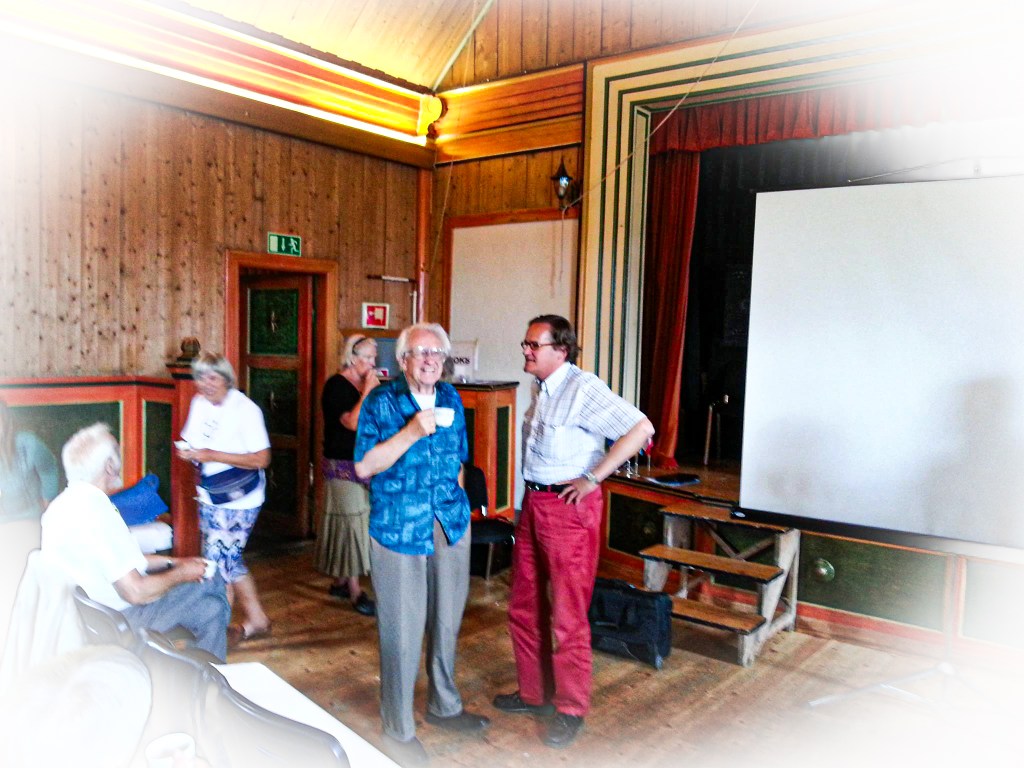
The two of us at Jondal, Norway, in 2012.
One of three videos I made with Johan in 2008.
•
 Johan Galtung 1930-2024
Leave a comment