
Johan was a cornerstone of our era – and to me an unwavering mentor.
Erik Degortes
Erika Degortes, PhD Candidate in National Peace Studies at the University of La Sapienza in Rome, co-founder and former director of the Galtung-Institute for Peace Theory and Peace Practice in Germany.
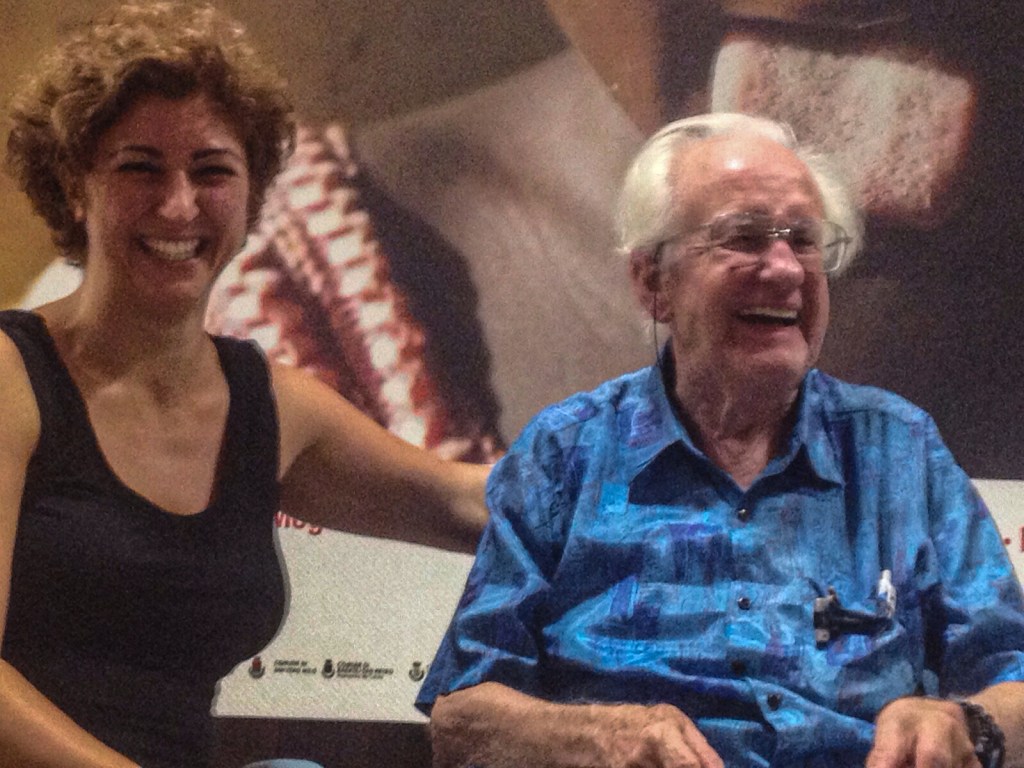
Johan Galtung was a cornerstone of our era, a committed intellectual whose tireless efforts greatly influenced the study and practice of peace. Yet, to me, he was also an unwavering mentor and a loving friend.
In May 2011, alongside him and other colleagues, we founded the Galtung Institute for Peace Theory and Practice in Germany, which he described as “the final project of this kind in my life.”
In over fifteen years of working with Johan Galtung, he never “taught” me in a conventional manner but shared his wealth of experience, boundless optimism, keen analytical skills, and the courage always to speak the truth.
“Dedicate yourself tirelessly to peace, for countless forces are striving against it.”
Galtung addressed these words to me some time ago during one of our last conversations. With his message engraved in my mind and heart, I now devote myself to studying his writings and disseminating his methodology through conferences and seminars.
In this endeavor, I follow three pivotal lessons inherited from his example: the power of personal commitment, daily discipline, and an unwavering determination to build peace.
Peace does not arise spontaneously; it requires meticulous, continuous effort, involving conflict transformation, trauma reconciliation, and the pursuit of harmony and equity as ongoing practices.
Ultimately, peace is a way of life.
Johan’s unwavering dedication to these practices exemplified utmost integrity and intellectual honesty. He emphasized the importance of viewing conflicts from diverse perspectives, including recognizing one’s role in them. Our conversations were profound and insightful.
Even during the most intense work periods, they extended beyond geopolitics and international conflicts to encompass life lessons: In a conflict, even when you yourself are involved, “strive to be impartial. See yourself or parts of yourself with the same clarity you see others. And do not be ashamed if you need assistance for this.”
Indeed, evaluating one’s objectives and those of others, recognizing legitimate and compatible goals and means -those that are legal and align with human rights and fundamental needs – is a continuous exercise requiring profound self-reflection and interaction with others.
Consequently, this foundational work opens the door to creativity, allowing us to contribute meaningfully to positive peace—a collaborative effort that equitably benefits all involved. The question we must ask ourselves is: What minor adjustments can we make to optimize the alignment of everyone’s legitimate goals?
Furthermore, once you have envisioned a common project that can improve the lives of all involved, based on mutual and equal benefit, “Implement that vision. If it doesn’t work, try again! Perseverance is key.”
In other words, peace begins within us, at home and through the choices we make in life.
To conclude, reflecting on Johan, one envisions him in his ideal setting: diligently working, consistently welcoming innovative ideas, articulating his thoughts on complex realities, and facilitating intense dialogues with his masterful style, while continuously encouraging and reinforcing the notion that the pursuit of a just society demands both time and perseverance.
Throughout his life, he embodied the tenacity and resilience necessary to advance these endeavors.
Thank you, Johan!
Note
Quotations, apart from the first one which comes from a private conversation, are taken from Johan’s editorial “Conflict transformation as a way of life.”
•
 Johan Galtung 1930-2024
Leave a comment